
In the realm of art and design, few movements capture the imagination as vividly as Art Nouveau. Emerging from the ashes of academic tradition, this movement blossomed into a unique style that seamlessly wove the essence of the natural world into the fabric of artistic imagination. Art Nouveau’s sinuous lines, organic motifs, and marriage of form and function, crafted a visual language that spoke of elegance, harmony, and modernity. As we dig deeper into this deconstruction, we will uncover the history and the style of Art Nouveau. The concepts and ideas will be laid bare for you to utilize in whole or in part. Let’s explore, appreciate, and unravel Art Nouveau.
- History of Art Nouveau
- Definition of Art Nouveau
- Sub-Genres
- Major Artists and Their Contributions
- Deconstruction
- Visual Examples
- More Resources
History of Art Nouveau
The Art Nouveau movement emerged during the late 19th to early 20th centuries, pervading Europe and the United States. Born out of a desire to escape the eclectic historical styles, this movement was a reaction against the academic art and industrialization of the time. It evolved from earlier styles, adopting organic and geometric forms, and was heavily influenced by the technological advancements of the era. The interaction with other contemporary art movements shaped its development, leading to a unique blend of elegant designs and modern functionality. The ethos of Art Nouveau was rooted in the belief that the function of an object should dictate its form, paving the way for later modernist movements like Bauhaus, and bridging the gap between fine and applied arts.
Definition of Art Nouveau
Art Nouveau, a term that translates to “new art,” emerged as a movement rooted in a robust design philosophy that sought to inject novelty and modernity into the artistic and architectural arenas. This style was not merely a visual treat but an embodiment of a deeper understanding of aesthetics and functionality.
A. General Characteristics
- Organic, Flowing Lines and Forms:
One of the defining characteristics of Art Nouveau is its use of organic, flowing lines and forms. This aspect of the style reflects a fluidity that often resembles natural elements, bringing a sense of dynamism and vitality to designs. The sweeping, graceful curves evoke a natural elegance, encapsulating a form of ideal beauty that is both alluring and enchanting. - Use of Nature-inspired Motifs:
Nature is not just an inspiration but a muse for Art Nouveau. The designs frequently incorporate floral motifs, leaf patterns, and other botanical elements. This affinity for nature’s forms is manifest in various mediums, be it paintings, architecture, or decorative arts, imbuing them with a poetic and romantic essence that captivates the beholder. - Craftsmanship and Artistic Expression over Industrial Production:
At a time when industrial production was booming, Art Nouveau chose to champion the cause of individual craftsmanship and artistic expression. The movement sought to revive the value of artistry and meticulous workmanship, creating a stark contrast to the mass-produced goods that were flooding the markets.
B. Materials and Techniques
- Use of New Materials (e.g., glass, iron):
The revolutionary spirit of Art Nouveau extended to the use of materials. Glass and iron became the mediums through which artists and architects could explore new frontiers of creativity. These materials allowed for the realization of the fluid forms and intricate designs characteristic of the style. - Innovation in Techniques (e.g., glassblowing, metalwork):
Techniques such as glassblowing and metalwork saw significant advancements under Art Nouveau. Artists and craftsmen pushed the boundaries of traditional techniques, creating not merely objects, but pieces of art that testified to the skill and innovation of the movement.
C. Functional and Decorative Aspects
- Integration of Form and Function:
Art Nouveau was not about aesthetics alone; it was a marriage of form and function. The design principles encouraged a harmonious integration where the beauty of the form enhanced the functionality of the object, and vice versa. - Emphasis on Decorative Arts:
This movement placed a significant emphasis on the decorative arts, aspiring to elevate them to the same status as the fine arts. The decorative arts under Art Nouveau were seen as a crucial medium through which the ideals of beauty, organic form, and artistic craftsmanship could be inserted into the daily lives of individuals, making art an intrinsic part of the societal fabric.
Sub-Genres
Art Nouveau encapsulated a variety of stylistic nuances and regional distinctions, which are sometimes considered as sub-genres or related styles. Below are some of these variations and related styles often associated with Art Nouveau:
- Regional Variants:
- Jugendstil: This is the German variation of Art Nouveau, and it often displayed a more geometric and less ornate style compared to its French counterpart.
- Stile Liberty or Stile Floreale: In Italy, Art Nouveau was referred to as Stile Liberty or Stile Floreale, often showcasing more floral and flowing designs.
- Modernisme: In Catalonia, Spain, Art Nouveau took a unique form known as Modernisme, with Antoni Gaudí as one of its most notable proponents. It often featured organic forms and vibrant ceramic tiles.
- Secession Style: In Austria, the style was known as Secession Style, influenced significantly by the Vienna Secession, a local art movement that sought to break away from traditional art forms.
- Related Styles:
- Glasgow Style: This style, led by Charles Rennie Mackintosh in Scotland, is often associated with Art Nouveau due to its emphasis on stylized natural forms, although it incorporates more geometric designs.
- Aestheticism: In England, the Aestheticism movement, with proponents like Aubrey Beardsley, also shared the emphasis on artistic and decorative beauty characteristic of Art Nouveau.
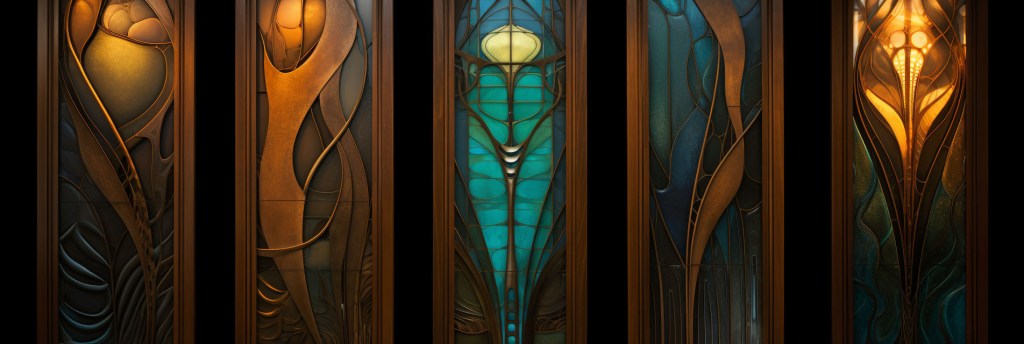
Major Artists and Their Contributions
Alphonse Mucha
- Brief Biography:
- Alphonse Mucha (1860-1939) was a renowned Czech artist known for his distinctive Art Nouveau style that intertwined ornate decorative elements with evocative figures.
- Major Works:
- Mucha’s body of work is vast, but he is most celebrated for his color lithograph posters, notably the “Gismonda” poster for actress Sarah Bernhardt which skyrocketed his fame, and his “Seasons” series which encapsulates the essence of Art Nouveau with its ornate details and elegant female figures.
- His masterpiece, “The Slav Epic,” is a series of twenty monumental canvases narrating the history and mythology of the Slavic peoples, showcasing his profound love for his homeland.
- Contributions to Art Nouveau:
- Mucha significantly influenced the aesthetic framework of Art Nouveau, his artistry in graphic design and decorative arts became synonymous with the movement, propelling it into mainstream recognition.
- His utilization of swirling lines, organic forms, and ethereal female figures provided a visual lexicon for Art Nouveau, influencing a generation of artists and designers.
- Mucha’s emphasis on the spiritual and symbolic in art embodied the Art Nouveau ethos of integrating beauty and art into everyday life.
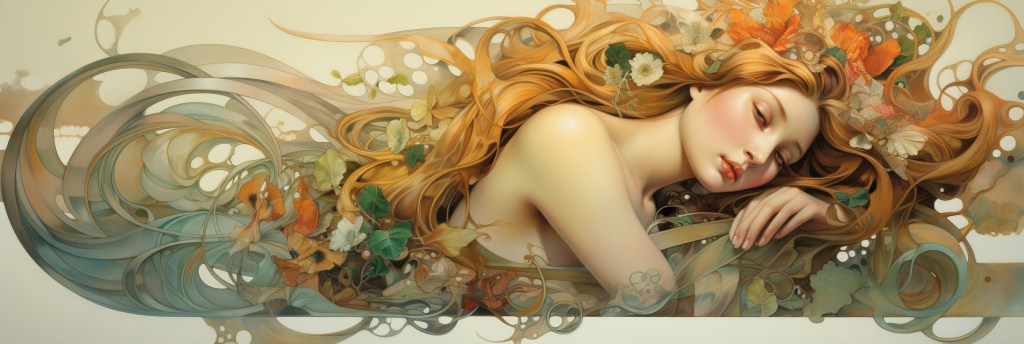
Gustav Klimt
- Brief Biography:
- Gustav Klimt (1862-1918) was an Austrian symbolist painter and one of the most prominent members of the Vienna Secession movement.
- Major Works:
- Klimt is famed for his symbol-laden paintings like “The Kiss” and “Portrait of Adele Bloch-Bauer I,” where he melded sensual imagery with ornate decorative elements.
- His “Beethoven Frieze,” a monumental wall painting, is a hallmark of his ability to blend form, function, and allegory.
- Contributions to Art Nouveau:
- Klimt played a pivotal role in the evolution of Art Nouveau in Austria, moving it towards a more modern and abstract direction.
- His decorative, highly stylized, and erotic imagery became emblematic of the movement, infusing it with a blend of symbolism and sensuality.
- By co-founding the Vienna Secession, Klimt fostered an environment that nurtured the Art Nouveau movement, enabling a dialogue between traditional and modernist ideas.
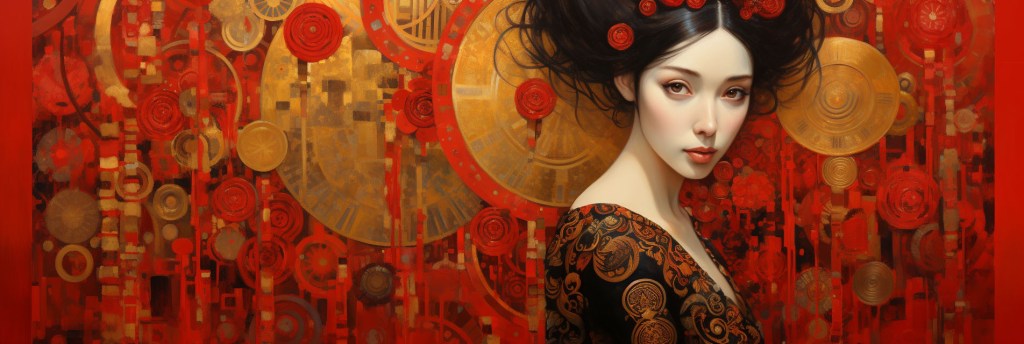
Antoni Gaudí
- Brief Biography:
- Antoni Gaudí (1852-1926) was a visionary Catalan architect known for his unparalleled style that blended Art Nouveau, Gothic, and Moorish influences.
- Major Works:
- Gaudí’s magnum opus is the still-unfinished Sagrada Família, a basilica in Barcelona that encapsulates his organic aesthetic and architectural innovation.
- Other notable works include Parc Güell and Casa Batlló, which are celebrated for their unique forms, vibrant ceramic tiles, and intricate ironwork.
- Contributions to Art Nouveau:
- Gaudí’s architectural genius redefined the Art Nouveau style by infusing it with his unique blend of geometry and naturalism.
- His works are a testament to the Art Nouveau ethos of harmonizing form and function, and his innovative use of materials and colors brought a new level of vibrancy to the movement.
- By transcending traditional architectural boundaries, Gaudí showcased the boundless creative potential inherent in Art Nouveau, inspiring a lineage of architects and designers to explore beyond the conventional.
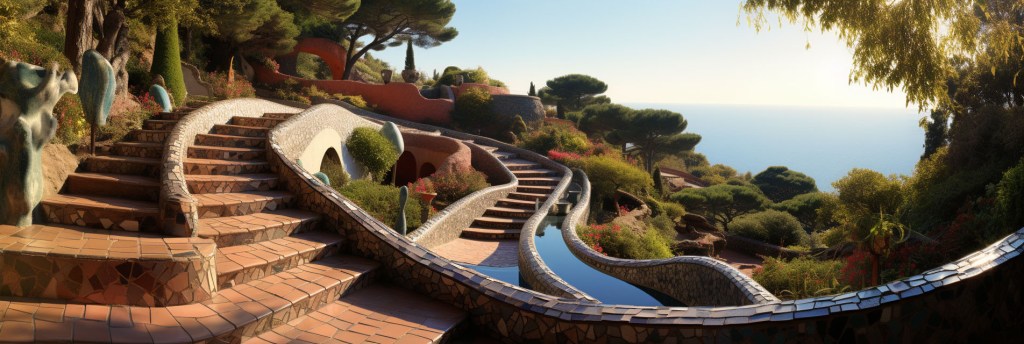
Deconstruction
Art Nouveau is a whimsical dance of form and function. This movement ushered in a novel aesthetic characterized by fluid lines, organic motifs, botanical forms, the rhythm of asymmetrical lines, and the embrace of artistic craftsmanship. It represents an ode to nature and a bold stride towards modernity, embodying a harmonious blend of the ornamental and the functional. Through the lens of Art Nouveau, the mundane was transformed into the exquisite, and the ordinary blossomed into the extraordinary.
| Technique | Description |
| Whiplash Curvature | A style of line or curve characterized by its flowing and swirling nature, often seen in the ornamental elements of Art Nouveau designs. |
| Rhythmic, Fluid Lines | Lines that flow smoothly and with a certain rhythm, creating a harmonious visual effect typical in Art Nouveau artwork. |
| Linear Outlines | The use of lines to define forms, often with a flowing, organic quality in Art Nouveau designs. |
| Flat, Abstracted Forms | Simplified, two-dimensional forms often inspired by natural elements, a characteristic feature of Art Nouveau visual aesthetics. |
| Organic Line Work | Utilization of lines inspired by natural forms, creating a sense of movement and life in Art Nouveau designs. |
| Asymmetry | A lack of symmetry or balanced proportions in design, often used to create a dynamic visual effect. |
| Mosaic | Art created by arranging small colored pieces of glass, stone, or other materials to form a pattern or image. |
| Enamelwork | The process of fusing powdered glass to a substrate through firing, often used in jewelry and artwork. |
| Etching | A printmaking technique where lines are cut, engraved, or etched into a metal plate. |
| Inlay Work | A process where contrasting materials are inserted into depressions in a base object to create designs. |
| Embossing | Creating raised designs or relief in a surface by pressing or hammering a design from the back. |
| Elongation | Extending or stretching forms to create a sense of elegance and verticality. |
| Medium | Description |
| Ceramics | The art of making objects by shaping pieces of clay and then baking them until they are hard. |
| Metal | the manipulation of metal to create sculptures, jewelry, and decorative objects. |
| Stone | carving sculptures, architectural elements, and other decorative items out of stone |
| Posters | Graphic designed posters with stylized, often nature-inspired imagery and typography, popular in the Art Nouveau era. |
| Textiles | Materials created by weaving, knitting, or felting fibers together, used in clothing and furnishings. |
| Architecture | The design and construction of buildings in a style characterized by the use of organic forms, curved lines, and often, elaborate ornamentation. |
| Interior Design | The design of indoor spaces in a style characterized by the use of organic forms, and often, elaborate ornamentation. |
| Jewelry Design | The creation of jewelry items featuring typical Art Nouveau motifs such as nature-inspired forms, curves, and often, semi-precious stones. |
| Stained Glass | Colored glass used to create decorative or pictorial designs, often seen in windows and lampshades. |
| Magazine Advertisements | Advertisements designed in the Art Nouveau style, often featuring stylized, flowing lines and organic forms. |
| Ticket Stubs | Design of ticket stubs in a distinctive Art Nouveau style characterized by stylized imagery and typography. |
| Billboards | Large outdoor advertising structures designed with stylized, often nature-inspired imagery and typography, popular in the Art Nouveau era. |
| Style | Description |
| Flowery and Globular Designs | Designs characterized by floral motifs and rounded, bulbous forms often seen in Art Nouveau artwork and decor. |
| Floral Motifs | Decorative elements based on flowers, a common theme in Art Nouveau design. |
| Organic and Sinuous Forms | Forms inspired by nature, characterized by flowing and curving lines, typical of Art Nouveau’s attempt to harmonize with the natural environment. |
| Sinuous and Flowing Motifs | Motifs characterized by smooth, winding lines creating a fluid, harmonious look. |
| Japonism | The influence of Japanese art and design on Art Nouveau, bringing in elements like asymmetry, simple forms, and nature-inspired themes. |
| Jugendstil | The German variant of Art Nouveau, characterized by a more geometric and less ornamental style, yet still influenced by natural forms. |
| Sezessionsstil | The Austrian variant of Art Nouveau, associated with the Vienna Secession, characterized by a desire to break away from historical styles. |
| Glasgow Style | A variant of Art Nouveau centered in Glasgow, characterized by austere geometric forms and distinctive typography. |
| Exoticism | The fascination with and incorporation of foreign and unfamiliar themes or styles. |
| Modernisme | Catalan Art Nouveau style characterized by vibrant ceramic tiles, rare twisted iron forms, etc. |
| Naturalistic Patterns | Designs inspired by natural forms like flowers, leaves, and other organic shapes. |
Because Art Nouveau is such a broad style that extends to more than just fine art or visual art; here is an additional selection of terms corresponding to various disciplines.
Architecture
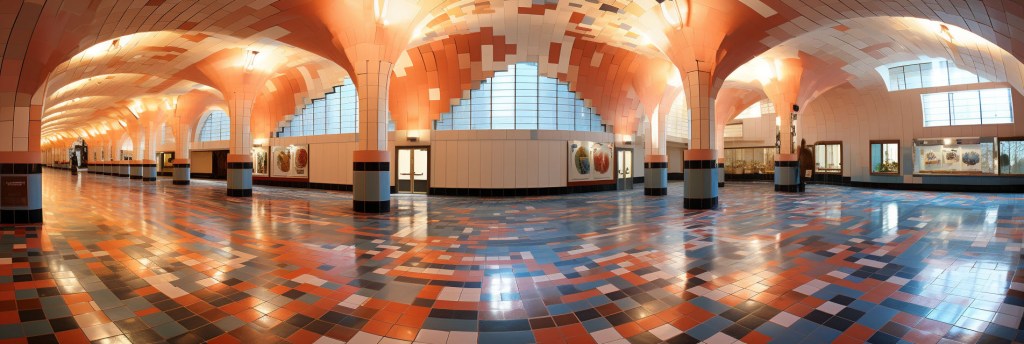
| Ornamental Facades | Decorative front faces of buildings, often with intricate, nature-inspired designs in Art Nouveau architecture. |
| Cast Iron Framework | The use of cast iron as a structural and decorative element in buildings, often with ornate designs. |
| Mosaic Tilework | The use of small tiles to create decorative patterns on floors, walls, and other surfaces. |
Interior Design
| Decorative Moulding | Ornamental trimmings in buildings, often with complex, nature-inspired designs in Art Nouveau interiors. |
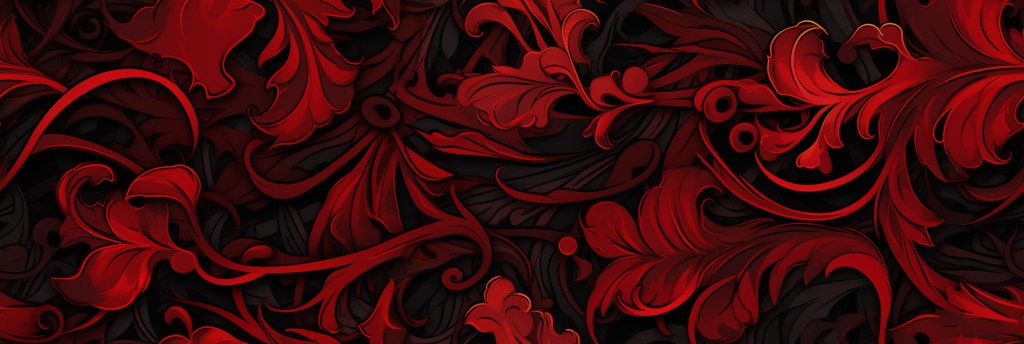
| Wallpaper Designs | Decorative wall coverings with repeating patterns, often of flowers or organic shapes. |
| Inlaid Wood Flooring | Flooring with embedded decorative designs, often using contrasting wood types. |
| Stylized Furniture | Furniture with a distinctive Art Nouveau style, often featuring organic lines and decorative elements. |
| Metalwork Accents | Decorative metal elements used in furnishings or architectural details. |
| Stencil Decor | Decorative elements applied using stencils, often with repeating or symmetrical designs. |
| Tapestry | Woven or embroidered fabric artworks, often with complex, nature-inspired designs in Art Nouveau style. |
Graphic Design
| Art Nouveau/Organic Typography | Experimentation with new styles and techniques in typography, often with organic forms characteristic of Art Nouveau. |
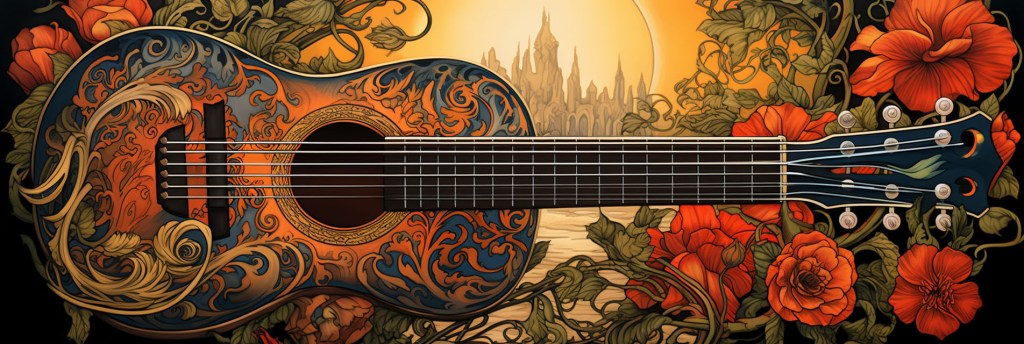
| Poster Art | A significant medium for Art Nouveau expression, utilizing bold graphics and typography to create visually striking posters. |
| Color Lithography | A printing technique that allowed for the creation of vivid multi-colored images, widely used in Art Nouveau posters and advertisements. |
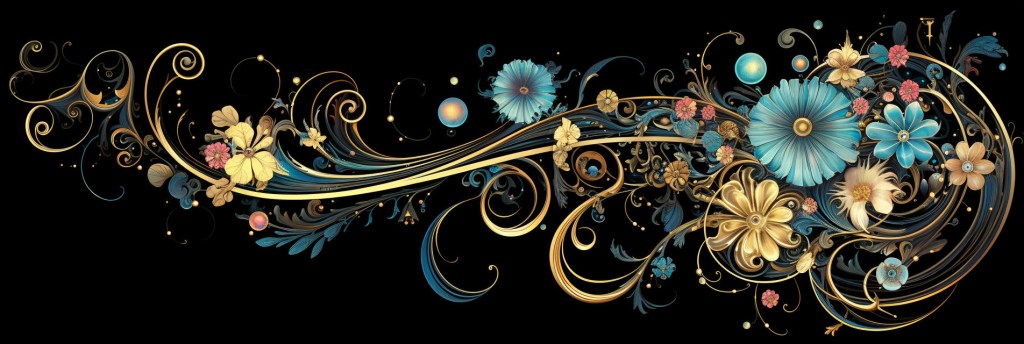
| Graphic Ornamentation | Decorative elements used in graphic design, often with intricate, nature-inspired motifs in Art Nouveau style. |
| Symbolic Imagery | Use of imagery with deeper meanings or allegorical references, common in Art Nouveau graphic design. |
Fine Art
| Impressionistic Influence | The impact of Impressionism on Art Nouveau, with a focus on light, color, and everyday scenes. |
| Symbolist Elements | Incorporation of symbolic meaning or mystical themes within artworks, a characteristic of Art Nouveau fine art. |
| Fantasy Themes | Themes exploring fantasy, mythology, and the supernatural, often depicted in Art Nouveau fine art. |
| Allegorical Representation | Representation of abstract ideas through figures, actions or symbolic imagery, a common technique in Art Nouveau fine art. |
Glasswork
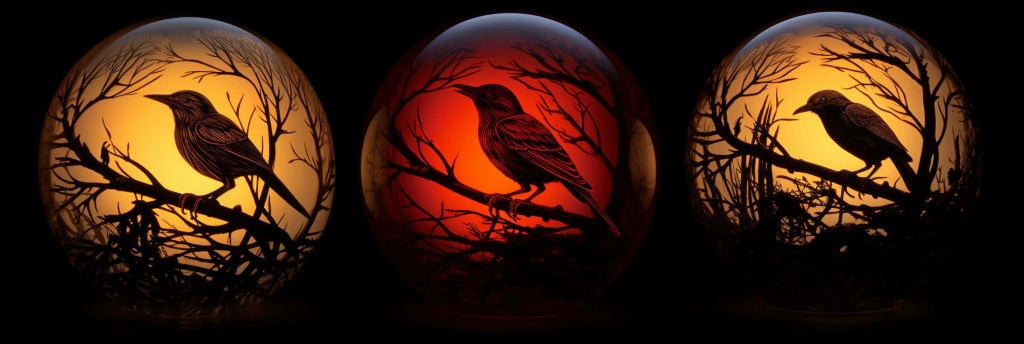
| Acid-Etched Glass | A technique of creating designs on glass by applying acidic substances to etch the surface, popular in Art Nouveau glasswork. |
| Glassblowing | A technique used to form glass objects by inflating molten glass into a bubble, often used in Art Nouveau. |
| Art Glass | Decorative or artistic glasswork often characterized by innovative forms and coloring techniques, a hallmark of Art Nouveau. |
| Cameo Glass | A form of glass art where designs are carved or etched to reveal different colored layers, popular in Art Nouveau glassware. |
| Translucent Colors | Colors that allow light to pass through, creating a glowing effect, characteristic of Art Nouveau glasswork. |
Jewelry
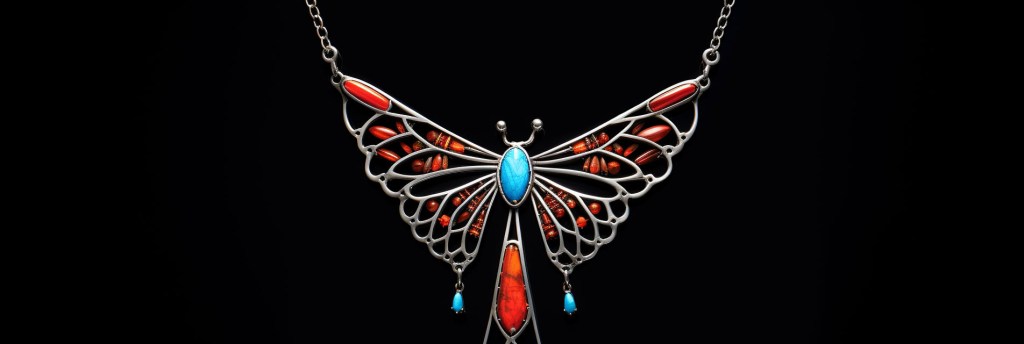
| Enamel Work | The technique of fusing powdered glass to metal, often used in Art Nouveau jewelry for decorative effect. |
| Insect Motifs | Designs inspired by insects, a common theme in Art Nouveau jewelry due to the movement’s emphasis on nature and organic forms. |
| Nature-inspired Designs | Jewelry designs inspired by natural elements such as flowers, plants, and animals, emblematic of Art Nouveau aesthetics. |
Visual Examples
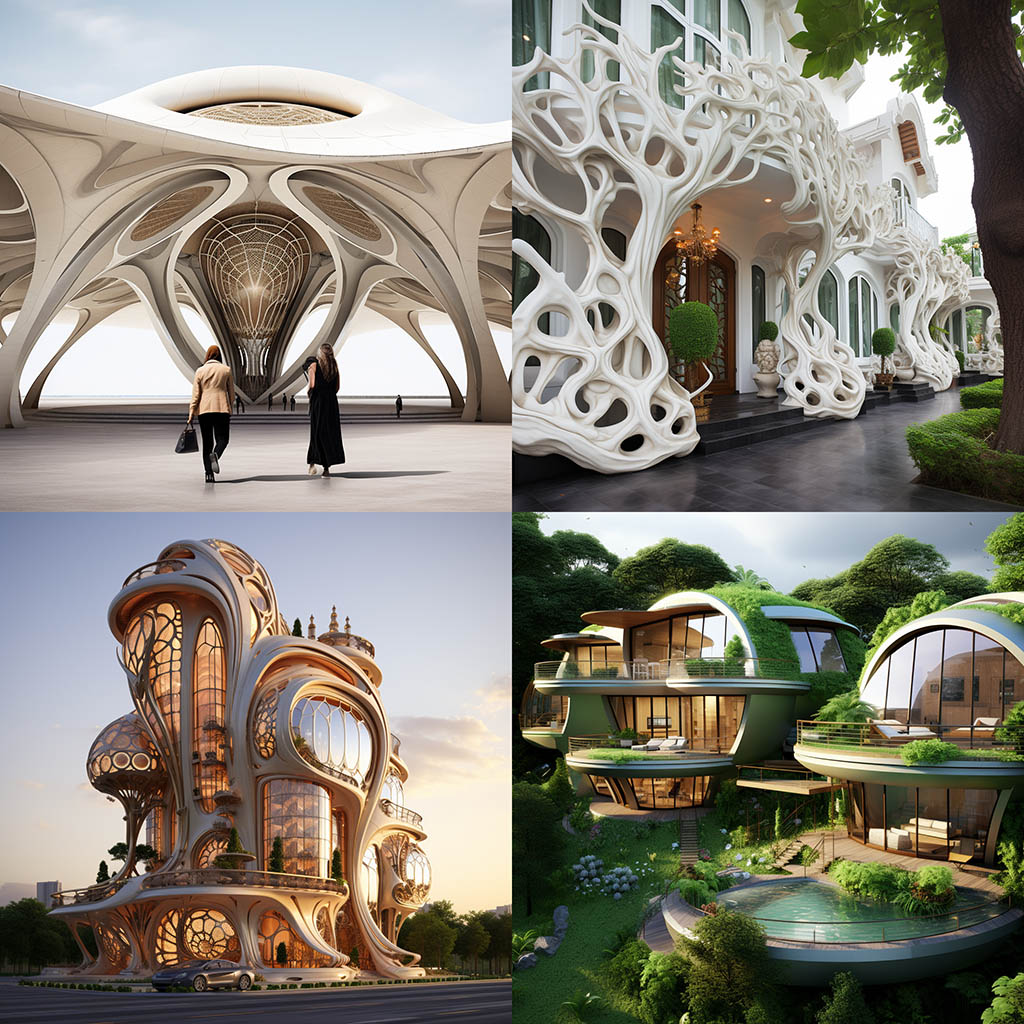
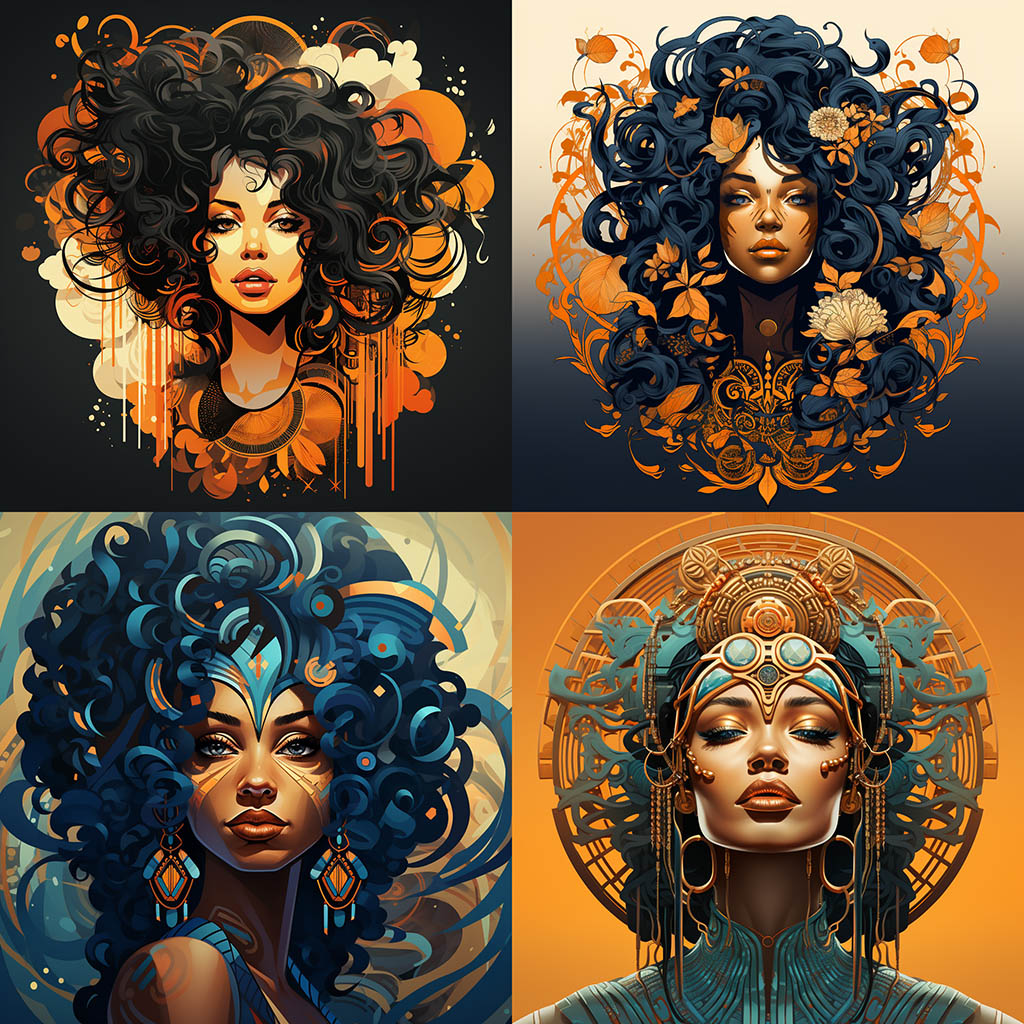
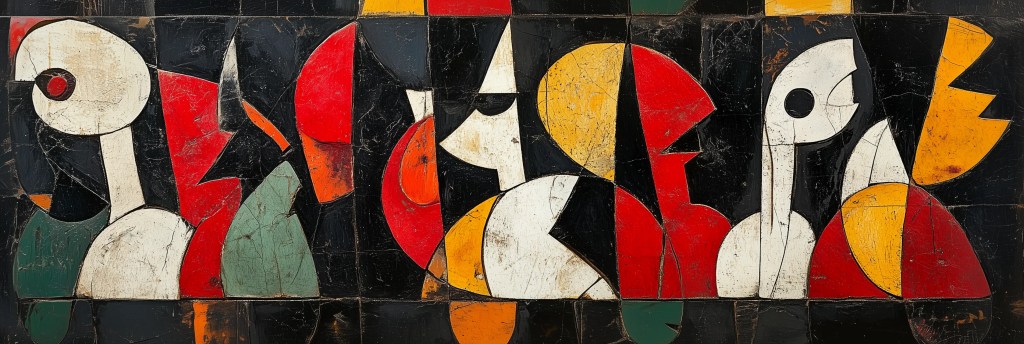
Now that you have a list of terms to work with. Here are some examples (complete with prompts) to get you started. Try some experimentation, you can easily change things up alot by adding/changing the --stylize parameter.
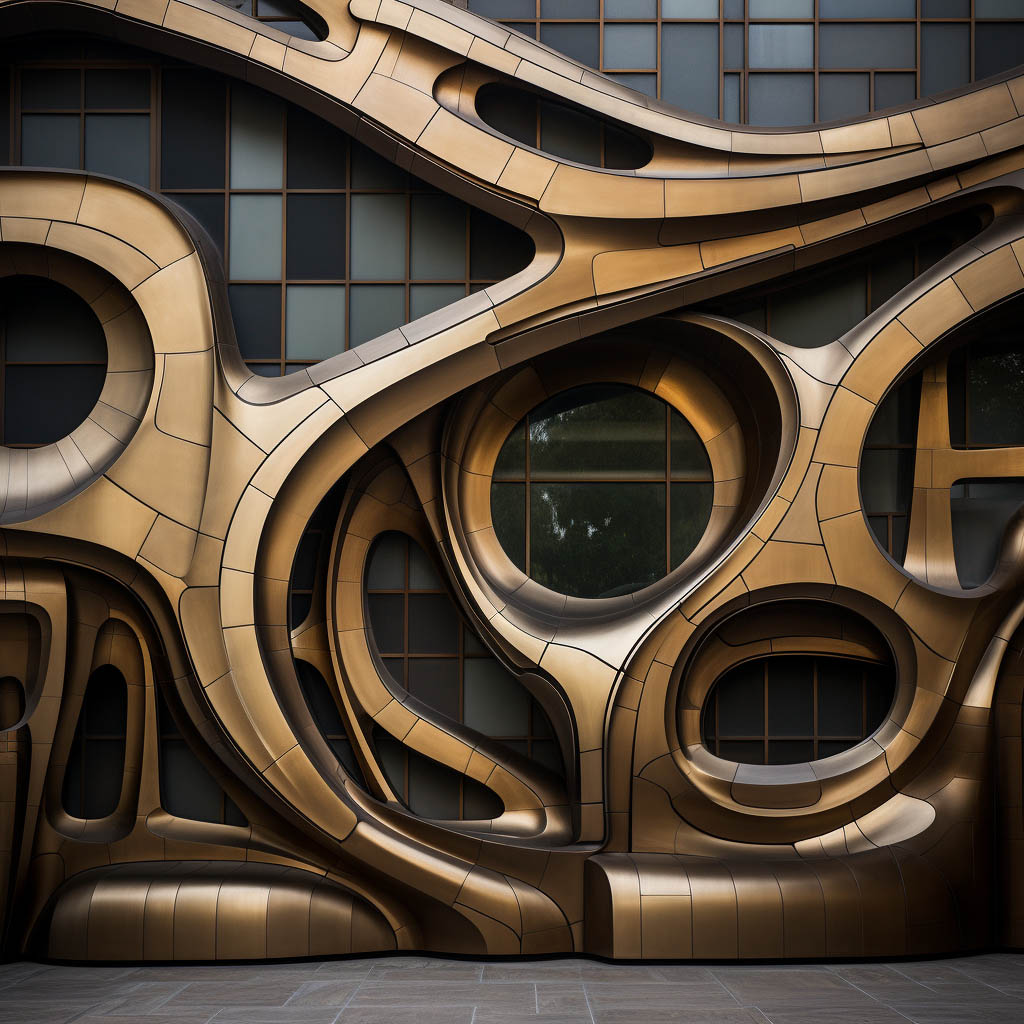
/imagine prompt: archology:: modernisme architecture, organic sinuous forms, exoticism:: --c 45 --stylize 200
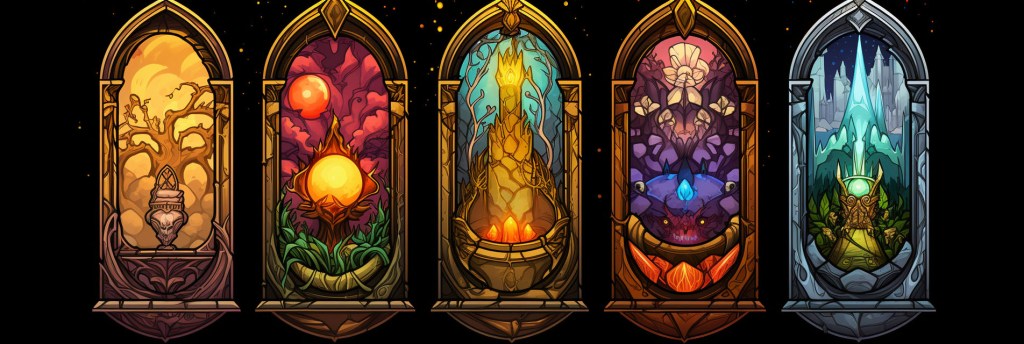
/imagine prompt: afrocentric Fantasy art vector style::2 organic linework, Art Nouveau Jugendstil Style, asymmetrical sanctuary:: --chaos 20 --stylize 200
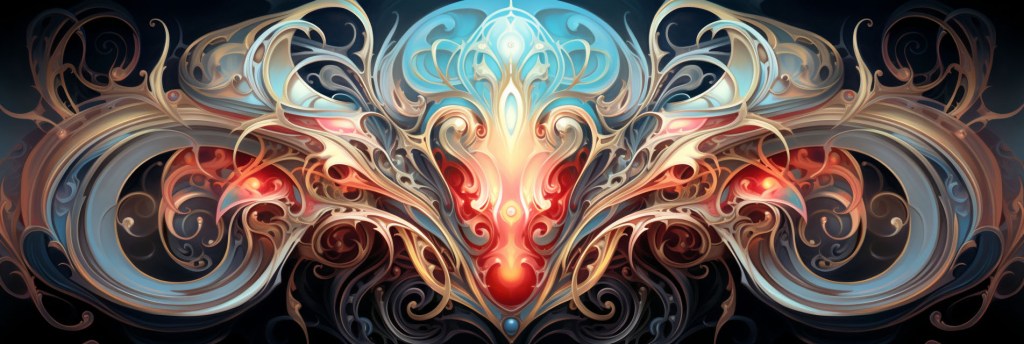
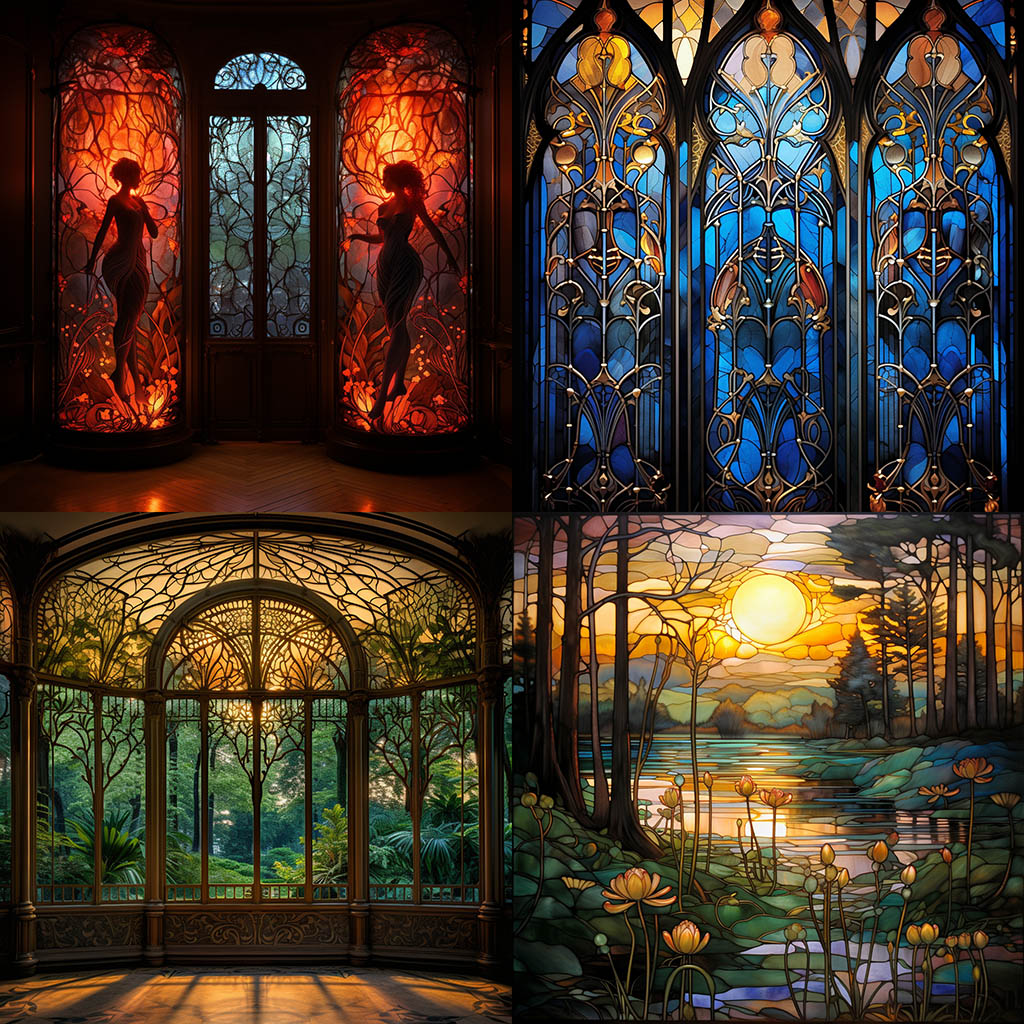
/imagine prompt: Art Nouveau stained glass::3 acid etched, luminant paneling, Glasgow Style::2 --chaos 20 --stylize 150
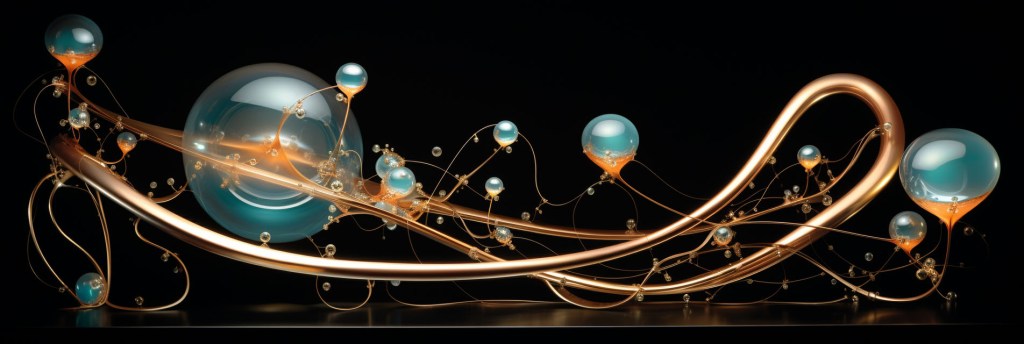
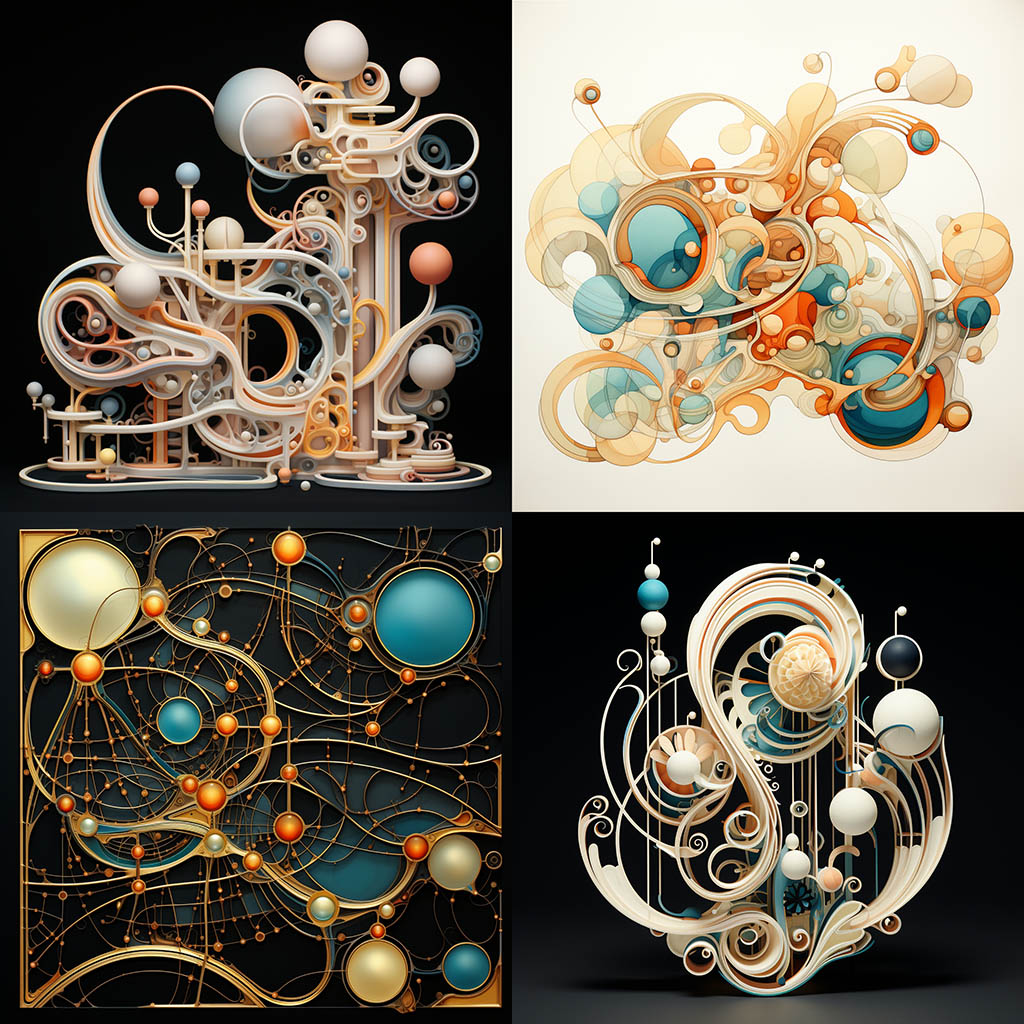
/imagine prompt: Art nouveau quantum bacteria:: Flat, Abstracted Forms globular design asymmetry:: --chaos 20 --stylize 150
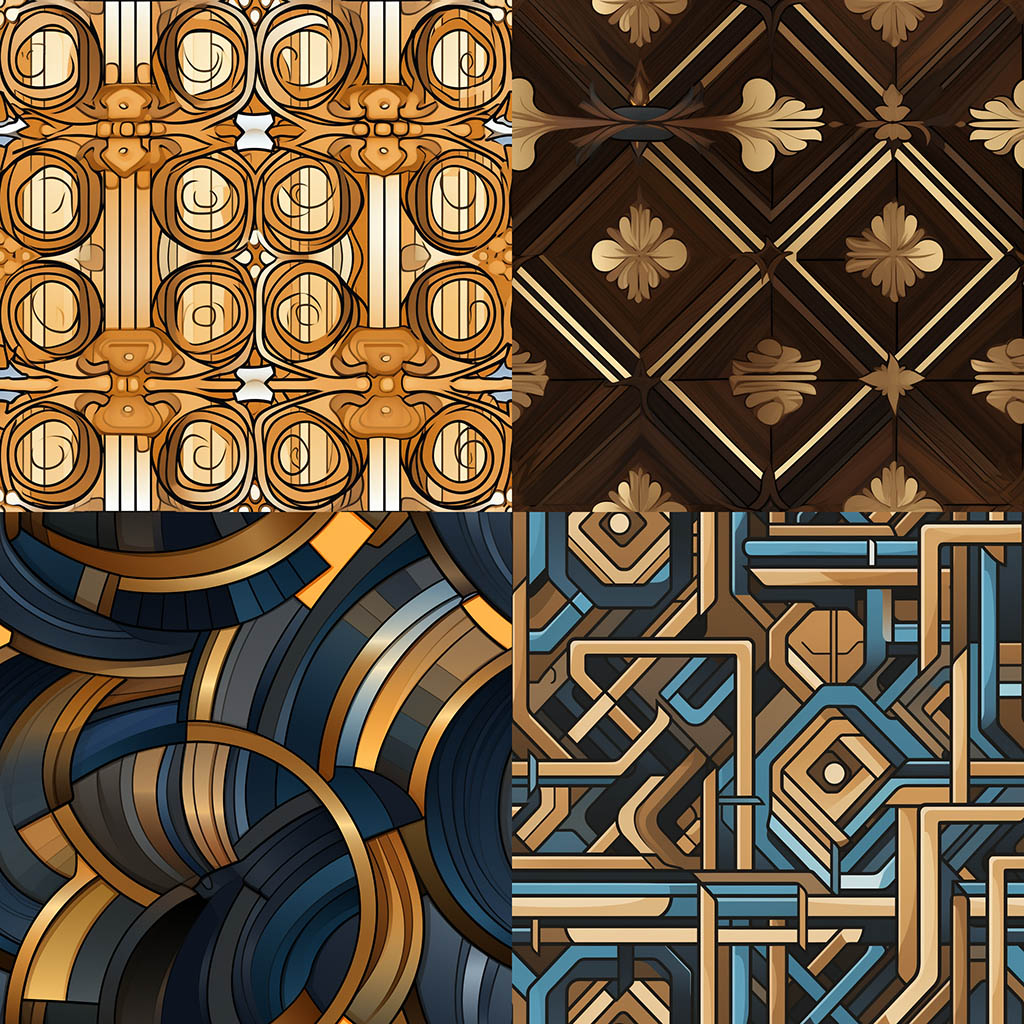
/imagine prompt: Inlaid Wood Flooring::3 Metalwork Accents Jugendstil Linear Outlines::2 --chaos 20 --stylize 200 --tile
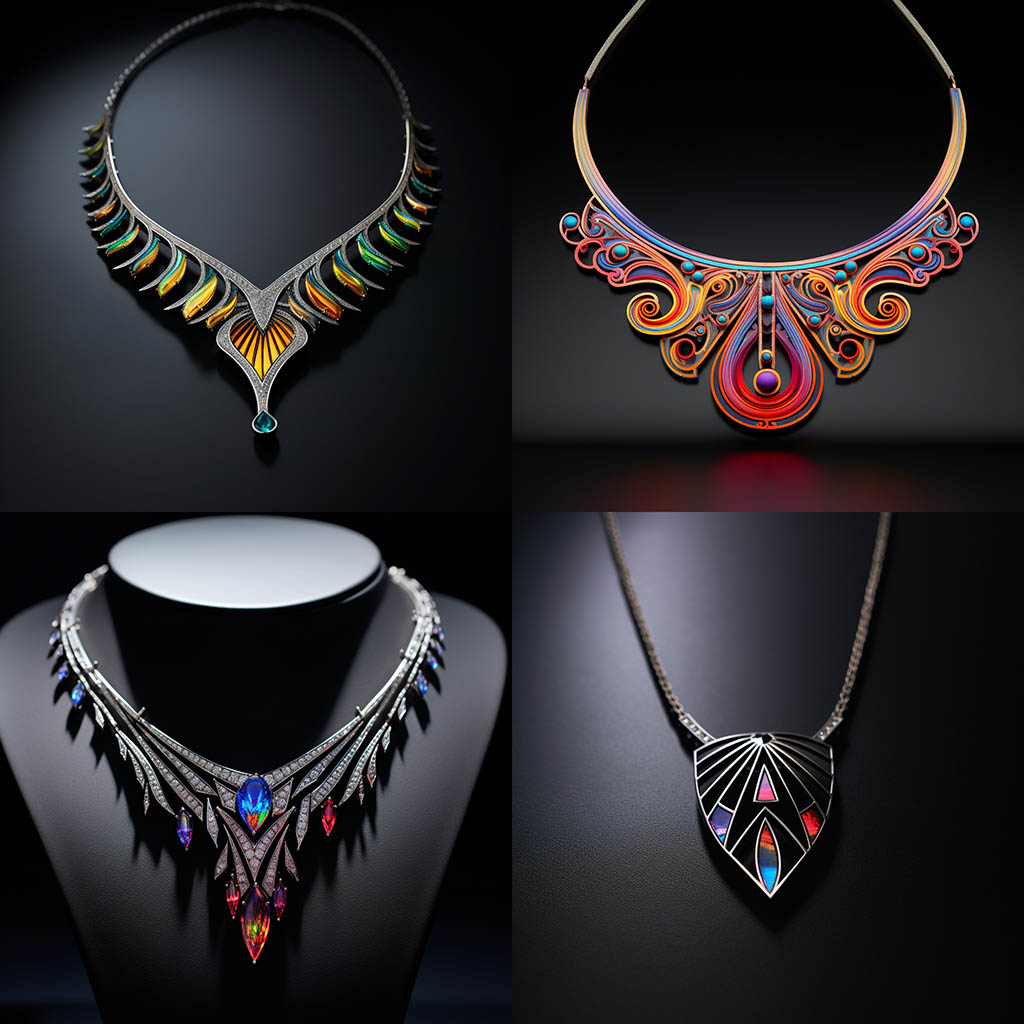
/imagine prompt: maximalist platinum necklace with neon gemstones:: Rhythmic, Fluid Lines Asymmetry Inlay Work Sezessionsstil
You should now be loaded with terminology and ideas that speed up your mastery of Art Nouveau Style. If this information is helpful, please subscribe to my newsletter so that you can be updated when the next article comes out. If there is a particular style you would like to cover, let me know in the comments; any thoughts or ideas are welcome.
More Resources
If you are newer to Midjourney or Discord see Midjourney: Get started and Setting Up Discord.
If you need more help with prompting see the prompting guide or check out these premade prompts.
If you need help fixing/perfecting an image see this guide.
If you are interested in AI art see here and here.


 Art Method Lab
You must be logged in to post a comment.