

The Bauhaus movement, a beacon of modernist thought, marked a radical shift in the approach to art, architecture, and design in the 20th century. Emerging amidst a backdrop of rapid industrialization and cultural upheaval, it sought to harmonize the aesthetic and the utilitarian, profoundly shaping the landscape of contemporary design. This article delves into the intricate tapestry of the Bauhaus ethos, unraveling its historical roots, defining stylistic elements, and spotlighting key figures who were the vanguards of this revolutionary movement. Join us as we journey through the foundations and evolutions of Bauhaus, and ultimately deconstruct this movement.
- History of the Bauhaus Movement
- Definition of Bauhaus
- Major Artists and Their Contributions
- Deconstruction
- Visual Examples
- More Resources
History of the Bauhaus Movement
The Bauhaus movement redefined artistic creativity in the context of industrial production and was founded by architect Walter Gropius in 1919 in Weimar, Germany. It emerged as a reaction to the traditionalist aesthetics and sought to embrace the modern industrial world, mirroring the principles of the Deutscher Werkbund, which advocated the integration of art with industry. The school moved from Weimar to Dessau in 1925 and then to Berlin in 1932, experiencing changes in leadership from Gropius to Hannes Meyer, and finally to Ludwig Mies van der Rohe.
The Bauhaus faced political pressure from the Nazi regime, which led to its closure in 1933. Despite this, the movement’s ideologies thrived internationally, with key figures continuing to influence art, design, and architecture, particularly in the United States, where they contributed significantly to the development of the International Style. The legacy of the Bauhaus is evident in its global impact on the fundamental aspects of modernist design, with its emphasis on functionality, simplicity, and the unity of various art forms.

Definition of Bauhaus
Core Principles
The Bauhaus style, deeply entrenched in the ethos of “form follows function,” is fundamentally about the fusion of aesthetics with practicality. It champions a design that ensures that every element serves a purpose, steering clear of any superfluous features. This philosophy of simplicity and functionalism was not just a style choice but a response to industrialization, which called for designs that could be mass-produced without losing their integrity.
Minimalism and geometric clarity stand at the forefront of Bauhaus, where linear and geometrical shapes replace any curvilinear or ornate forms. This simplicity is not merely for visual ease but for effective functionality, allowing the design to speak through its purpose. The Bauhaus movement embraced modern materials and technology, seeking to create designs that could adapt to the new industrial age, favoring materials that could be used in their natural form and applying industrial techniques to art production
Aesthetic Characteristics
In architecture, Bauhaus buildings are easily identifiable by their lack of ornamentation, favoring instead a streamlined and objective clarity. The Dessau Bauhaus, designed by Walter Gropius, is a prime example, with its flat-roofed, cubic shape, and a restrained color palette emphasizing the raw beauty of its construction materials. The design reflects a strong preference for straight edges, though some buildings do feature rounded corners, which serve to highlight the movement’s diversity in exploring shapes.
Graphic design within the Bauhaus sphere was groundbreaking, fundamentally altering typography, layout, and the use of shape and color. It was characterized by a functional minimalism, where every element had a specific role, thus focusing on the psychology of shape, color theory, and visual hierarchy. Typography was reimagined to be more than just text on a page; it was an integral part of the design that contributed to its overall functionality and aesthetic. The use of negative space and a focus on the basics of design layout became central to Bauhaus graphic design, influencing the direction of modern graphic design to this day.
Art within the Bauhaus was not separate from other disciplines but was seen as interlinked with them. The movement’s multi-disciplinary approach encompassed various art and design fields, blurring the lines between fine arts and crafts and between different creative practices. This approach was evident in the workshops of the Bauhaus school, which ranged from painting to weaving and beyond, emphasizing the movement’s commitment to integrating art into the fabric of everyday life.
In short, the Bauhaus style is a marriage of art and functionality. It is a style that speaks of its time—reflecting the needs and possibilities of the early 20th century—and continues to influence design and architecture with its timeless principles of functionality, minimalism, and a dedication to modern materials and techniques.

Major Artists and Their Contributions
Walter Gropius
Notable Works: Walter Gropius was the mind behind the design of the Bauhaus school building in Dessau, as well as the Harvard University Graduate Center and the United States Embassy in Athens. His architectural works are marked by a modernist aesthetic with an emphasis on functionality and simplicity.
Contributions: Gropius was a visionary in uniting the arts with industrial design, advocating for prefabrication and on-site assembly in construction. He held a firm belief in the potential of the artistically trained designer to imbue the mechanized product with a soul. His intellectual leadership and organizational skills were instrumental in establishing the Bauhaus school, which revolutionized design education and created a model that superseded the traditional approaches of the French École des Beaux-Arts.
Josef Albers
Notable Works: Josef Albers’s influential book Interaction of Color is a seminal work on color theory and visual perception. His Homage to the Square series is a profound exploration of color and spatial relationships using a single geometric shape.
Contributions: Albers played a crucial role in introducing European modernist ideas to America. His teachings at the Bauhaus, Black Mountain College, and Yale University, as well as his theoretical work on color, significantly influenced modern art and education, impacting movements such as Color Field Painting and Minimalism. His theories underpin the development of non-objective art in the post-Abstract Expressionism era.
Wassily Kandinsky
Notable Works: Wassily Kandinsky’s teaching at the Bauhaus was initially focused on the elements of form and color theory. His publication Point and Line to Plane reflects his deep engagement with the theoretical aspects of art, especially in abstraction.
Contributions: Kandinsky’s commitment to theoretical work on the language of art and its underlying psychological effects is well-documented. At Bauhaus, he continued to evolve his approach toward geometric abstraction, influencing the direction of modern art with his theories on color and form. His classes on nonapplied painting, begun when the Bauhaus moved to Dessau, were integral to the school’s curriculum, promoting an environment of exploration in abstract art.
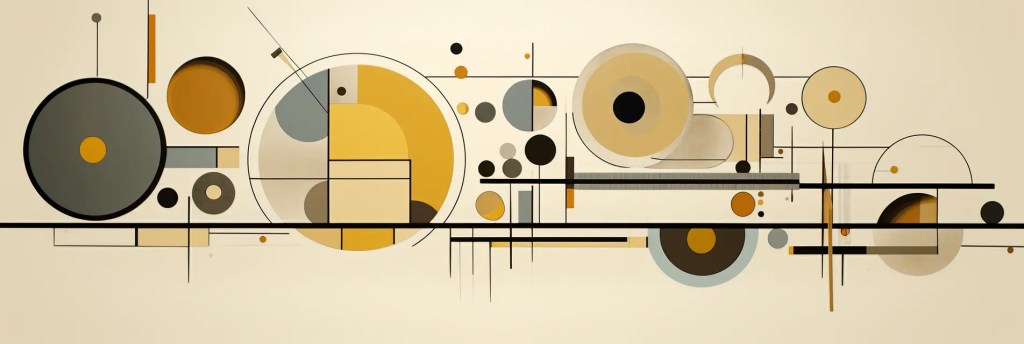
Deconstruction
The Bauhaus style is characterized by its unique approach to design, merging functionality with aesthetics. It evolved as part of the Bauhaus school of art, design, and architecture, founded by Walter Gropius in Germany in 1919. The key characteristics and techniques of the Bauhaus style include:
- Functionality Over Form: The Bauhaus philosophy emphasized the importance of function in design. Every aspect of a piece, whether it be a building, a piece of furniture, or a work of art, was designed with its intended use in mind.
- Simplicity and Minimalism: Bauhaus designs are known for their simplicity and lack of ornamentation. The focus was on clean, geometric shapes like rectangles, squares, and circles, and a clear, uncluttered look.
- Integration of Technology and Art: The Bauhaus style was one of the first to embrace modern industrial technology in design. This approach involved using new materials like steel, glass, and concrete, and experimenting with their properties in art and architecture.
- Use of Basic Colors: Bauhaus designs often featured primary colors (red, blue, and yellow), as well as black, white, and gray. These colors were used in their purest form, without patterns or gradients.
- Typography and Graphic Design: Bauhaus had a significant impact on typography and graphic design. It favored sans-serif typography, clean lines, and functional, readable text. This approach to typography was revolutionary at the time and has influenced modern graphic design profoundly.
- Interdisciplinary Approach: The Bauhaus style was notable for its integration of various art forms and crafts. This included architecture, painting, weaving, carpentry, and metalworking, among others.
- Mediums and Materials: In terms of mediums, Bauhaus artists and designers worked across a range of materials, reflecting their emphasis on functionality and the integration of art and industrial design. This included everything from traditional art materials to industrial metals and synthetic fabrics.

| Technique | Description |
| Geometric Abstraction | Art that uses geometric shapes and forms |
| Modernist Photography | Experimental and innovative photography techniques |
| Kinetic Art | Art that incorporates movement |
| Environmental Design | Incorporating natural elements into design |
| Medium | Description |
| Steel | Common materials used in Bauhaus architecture |
| Glass | Common materials used in Bauhaus architecture |
| Concrete | Common materials used in Bauhaus architecture |
| Mixed media | Combination of mediums |
| Tubular Steel | Innovative use of tubular steel in furniture |
| Style | Description |
| Geometric Forms | Use of simple geometric shapes like squares, circles, and triangles |
| Functionalism | Emphasis on practical and functional design over decorative elements |
| Minimalism | Aesthetic of simplicity and focus on the essentials |
| Industrial Design | Designing products for mass production |
| Primary Colors | Use of bold, primary colors (red, blue, yellow) |
| Asymmetry | Unbalanced, unexpected visual arrangements |
| Abstract Art | Art that doesn’t represent recognizable objects |
| Constructivism Influence | Russian movement influence with emphasis on geometrical forms |
| Textile Design | Innovative patterns and textiles designs |
| Functional Design | a design ethos that prioritizes practical utility over purely aesthetic considerations |
Visual Examples
Keep in mind that Bauhaus isn’t a style per se. It’s more of a thought process; and while I have tried to keep the same format of technique, medium, style the bauhaus movement encompasses many things. You will get the most mileage when you mix this list with other common styles and mediums. Lets experiment a bit and see what we get!
/imagine prompt: apartment building 3d render ::3 concrete, glass geometric, asymmetrical, minimalist::2
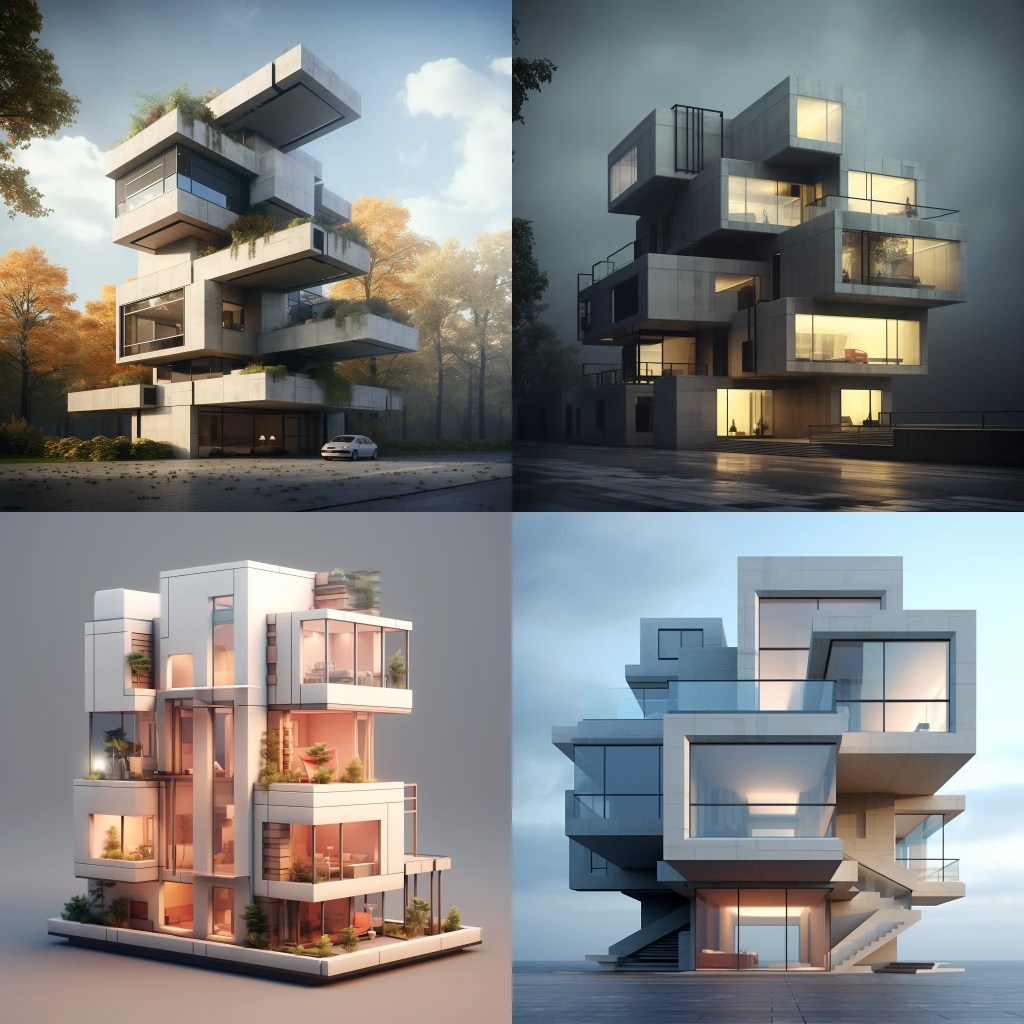
/imagine prompt: apartment building bauhaus design 3d render :: primary colors::
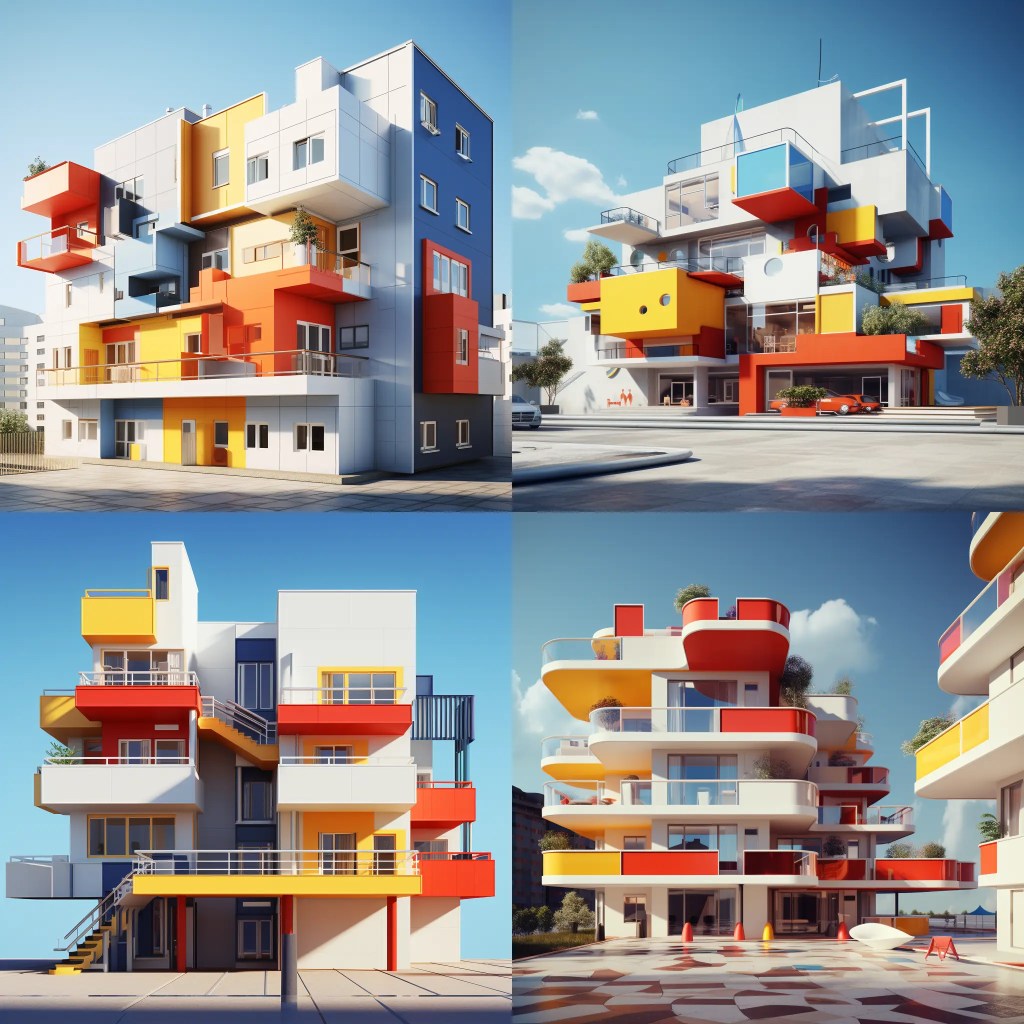
/imagine prompt: minimalist afrofuturistic pinup poster::4 geometric abstraction vector::5 --chaos 30 --ar 2:3

/imagine prompt: pinup poster::3 bauhaus geometric abstraction vector::2 --chaos 30 --ar 2:3 --style raw

/imagine prompt: minimalist chair, tubular steel and acylic:: geometric forms, functionalism, primary colors:: --chaos 30 --stylize 150
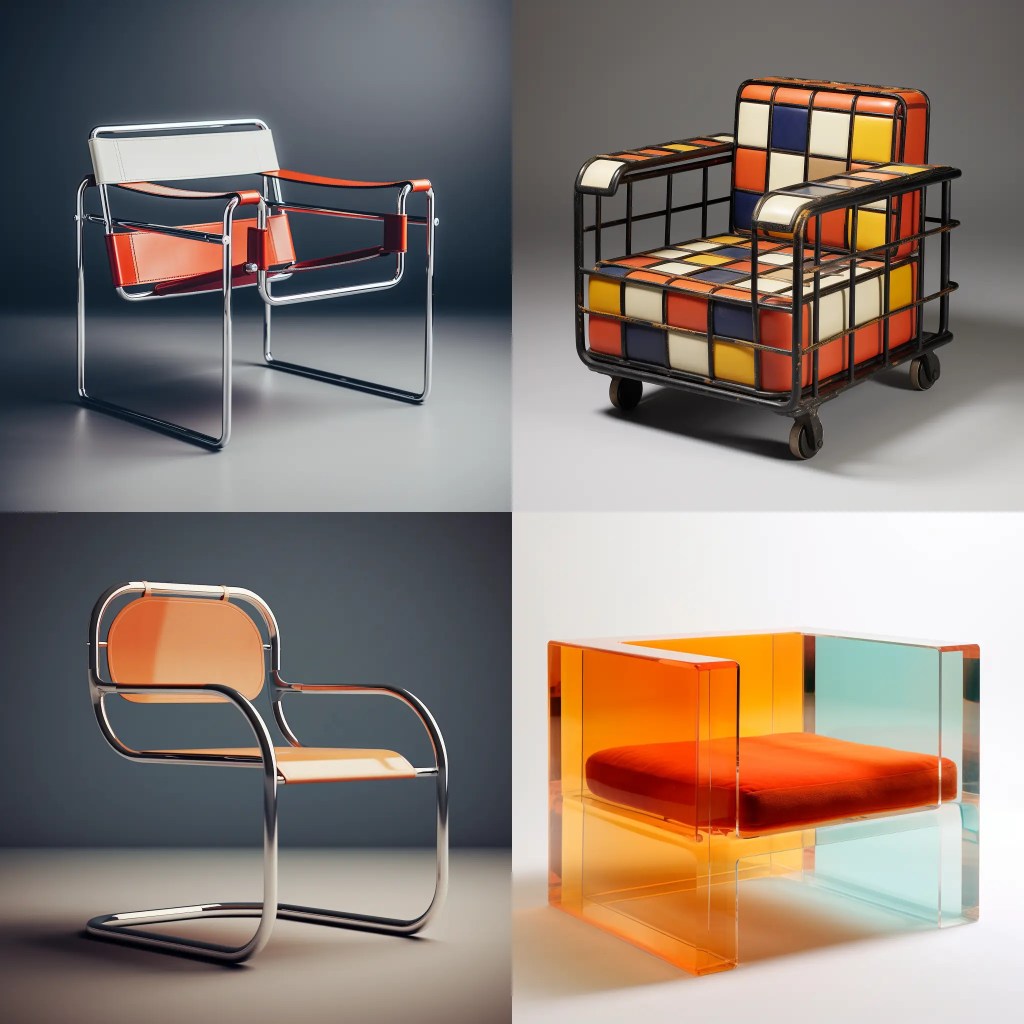
/imagine prompt: colorful bauhaus chair

What do you think of this breakdown of Bauhaus style? If this information is helpful, subscribe to my newsletter below so that you can be updated when the next article comes out. If there is a particular style you would like me to deconstruct, let me know in the comments; any thoughts or ideas are welcome.
More Resources
If you are newer to Midjourney or Discord see Midjourney: Get started and Setting Up Discord.
If you need more help with prompting see the prompting guide or check out these premade prompts.
If you need help fixing/perfecting an image see this guide.
If you are interested in AI art see here and here.



 Art Method Lab
You must be logged in to post a comment.