
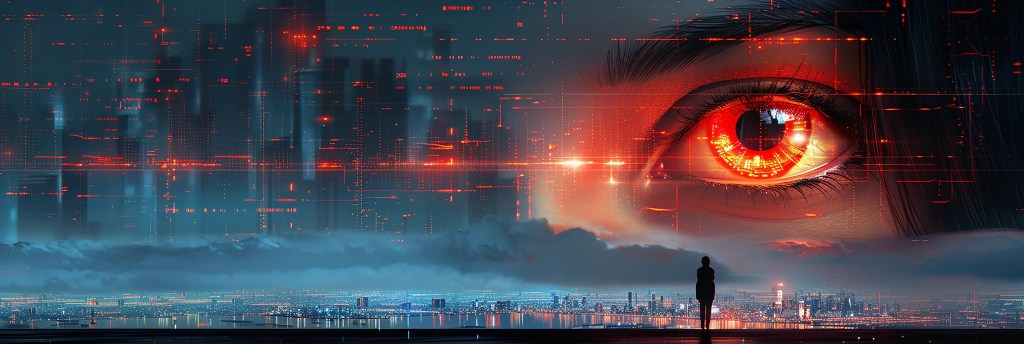
Cyberpunk: Deconstructed
The Cyberpunk aesthetic stands as a vivid testament to the fusion of high technology and the gritty substrata of urban life. This glimpse into the world of Cyberpunk isn’t just about understanding a genre; it’s about delving into a cultural phenomenon that intertwines the future with the echoes of a retrofuturistic past. How did this aesthetic emerge from the pages of speculative fiction to become a staple in contemporary art and media? What does it say about our dreams, fears, and the paradoxical relationship between human nature and technological advancement? As we explore the enigmatic realm of Cyberpunk, prepare to embark on a journey that challenges your perceptions and invites you to view the world through a lens tinted with neon and shadow.
History of Cyberpunk
The history of the Cyberpunk aesthetic is a mesmerizing tapestry, woven from the threads of 20th-century literature, art, and a burgeoning digital culture. It sprouted in the fertile ground of the New Wave science fiction movement, where visionary authors like Philip K. Dick and William Gibson began painting vivid pictures of a future saturated with advanced technology, yet marred by societal decay. The genre’s visual style, deeply influenced by these literary roots, burst into the broader cultural consciousness during the 1980s.
As the world grappled with the dawn of the digital age and rapid urbanization, Cyberpunk’s imagery began to mirror these realities, depicting sprawling cityscapes, omnipresent neon signs, and a palpable sense of dystopian grit. This period saw the aesthetic evolve from abstract concepts in novels like Gibson’s “Neuromancer” to a tangible, visually distinct style in art and film. The genre’s emphasis on the juxtaposition of cutting-edge technology with a deteriorating social fabric became its hallmark, resonating deeply with a society on the brink of the 21st century.
Cyberpunk’s journey through visual arts is a testament to its ability to adapt and reflect the anxieties and aspirations of different eras. It’s a genre that not only captivated the minds of its early architects but continues to evolve and inspire artists and audiences alike.

Definition of Cyberpunk
Cyberpunk, as an aesthetic in visual arts, is defined by its unique blend of high technology and urban decay, painting a picture of a future that is at once advanced and dystopian. This genre thrives on the contrast between cutting-edge advancements in science and technology, like artificial intelligence and cybernetics, and the chaotic, often decaying social structures in which they exist. It’s a visual narrative that speaks to the human condition amidst rapid technological change, often exploring themes of corporate dominance, social fragmentation, and the blurred lines between the virtual and the real.
At its core, Cyberpunk is characterized by its setting: sprawling, densely populated urban landscapes, drenched in neon lights and shrouded in perpetual night. The aesthetic merges futuristic elements with retro-analog sensibilities, creating a sense of timelessness. Its color palette is saturated with deep blues, purples, and vibrant neon hues, contrasting sharply with the darkness of its urban environments. This juxtaposition of brightness against the dark, often underpinned by a sense of rebellion against oppressive systems, is what gives Cyberpunk its distinctive, resonant edge.

Subgenres of Cyberpunk
Cyberpunk, with its rich and versatile aesthetic, has given rise to several notable subgenres, each adding its own unique flavor to the core theme.
Japanese Cyberpunk: This subgenre combines traditional Cyberpunk elements with Japanese cultural and technological influences. It often features a more intense focus on body horror and the fusion of man and machine, reflecting Japan’s rapid technological advancements and its societal implications.
Post-Apocalyptic Cyberpunk: Here, the typical urban and technological landscapes of Cyberpunk are merged with scenarios of societal collapse. This subgenre emphasizes survival and adaptation in a world where technological advancements couldn’t prevent societal downfall, often exploring themes of human resilience and ingenuity in the face of disaster.
Cyberpunk-Steampunk Fusion: A blend of the future-oriented Cyberpunk and the historically rooted Steampunk, this subgenre merges futuristic technology with Victorian and industrial age aesthetics. It creates a unique visual and thematic tapestry that juxtaposes the sleek, digital aspects of Cyberpunk with the mechanical, analog elements of Steampunk.
Major Artists and Their Contributions
William Gibson
Often hailed as the father of Cyberpunk, Gibson’s novel “Neuromancer” is a cornerstone of the genre. His vivid descriptions of a digital future heavily influenced the visual aspects of Cyberpunk, introducing iconic elements like cyberspace, virtual reality, and a networked world.

Philip K. Dick
His works, particularly “Do Androids Dream of Electric Sheep?” which inspired the film “Blade Runner,” delve into themes of artificial intelligence, identity, and corporate power. Dick’s exploration of these themes laid the groundwork for the dystopian, technologically advanced worlds that are quintessential to Cyberpunk.

Modern Interpretations in Media
Contemporary artists and filmmakers continue to evolve the Cyberpunk aesthetic. Movies like “The Matrix” and “Ghost in the Shell,” along with video games like “Cyberpunk 2077,” have brought the genre to a broader audience. These modern interpretations often focus on the fusion of physical and digital realities, reflecting current technological trends and societal concerns.

Deconstruction
As we delve into the deconstruction of Cyberpunk’s visual style, it’s essential to grasp the essence of its aesthetic language. This style is a tapestry of contrasts, where the brilliance of futuristic technology interweaves with the rawness of urban decay. It’s a visual dialogue, speaking through color, form, and metaphor, to capture a future that’s as beguiling as it is dystopian.
| Style | Definition |
|---|---|
| Neon-lit landscapes | Scenes dominated by bright neon lights, often in a night setting. |
| Urban decay | Depiction of deteriorating and abandoned cityscapes. |
| Retro-futuristic | Combining old-fashioned styles with futuristic technology. |
| Dystopian themes | Themes portraying a grim and oppressive society. |
| High-tech world | Environments characterized by advanced technological elements. |
| Dark and gritty | A mood or tone that is somber and raw. |
| Contrast of light and shadow | Stark differences between illuminated and dark areas. |
| Saturated colors | Intense, vivid color schemes. |
| Futuristic cityscapes | Urban landscapes with futuristic buildings and technology. |
| Cybernetic enhancements | Depictions of human-machine augmentations. |
| Technique | Definition |
|---|---|
| Digital illustration | Art created using digital tools and software. |
| Photomontage | Art created by combining multiple photographs. |
| Mixed media | Combining various artistic mediums in one piece. |
| 3D modeling | Creating three-dimensional digital representations. |
| Neon effect | Use of bright, glowing colors to mimic neon lights. |
| Glitch art | Incorporating visual errors for an aesthetic effect. |
| High contrast lighting | Sharp differences in lighting to create dramatic effects. |
| Layering | Building up of multiple layers of material or images. |
| Photo manipulation | Altering photographs digitally to create new images. |
| Graphic design | Artistic practice of creating visual content to communicate messages. |
| Medium | Definition |
|---|---|
| Digital art | Art created using digital technology as an essential part. |
| Graphic novels | Narrative works in which the story is conveyed through sequential art. |
| Photography | Art of creating images by capturing light on a sensitive medium. |
| Installation art | Large-scale, mixed-media constructions, often designed for a specific place. |
| Traditional painting | Art created using paint on surfaces like canvas or paper. |
| Sculpture | Three-dimensional art created by shaping materials like clay or metal. |
| Printmaking | Creating artworks by printing, typically on paper. |
| Collage | Art made by assembling different forms, often paper, into a new whole. |
| Drawing | Creating images using pencils, pens, or other mark-making tools. |
| Textile art | Art that uses plant, animal, or synthetic fibers to construct practical or decorative objects. |

Visual Examples
Time to experiment, try mixing this style with other styles!
/imagine prompt: A depiction of Alexander the Great as a cybernetic warlord, blending ancient armor with advanced technology. He stands on a futuristic battlefield, with neon-glowing weapons and a holographic map. His eyes glow with artificial intelligence, and behind him, robotic soldiers march in perfect unison. The sky is filled with hovering drones and abstract, vectorized patterns, creating a stark contrast with the natural landscape. The scene is a mesmerizing fusion of historical grandeur and futuristic innovation. --stylize 200 --c 5 --v 6.0

/imagine prompt: The image depicts a cybernetic human face intricately fused with advanced technology, highlighted by glowing neon lights in vibrant pinks and purples. Detailed circuits and digital patterns merge seamlessly with organic features, symbolizing the integration of human and machine. The cosmic background adds a surreal and celestial dimension, enhancing the futuristic and sci-fi atmosphere. Energy flows and holographic patterns create a dynamic and intricate visual, emphasizing the contrast between dark and light elements, capturing the essence of a futuristic, cyberpunk world. --v 6.0 --stylize 250 --chaos 15 --v 6.0

/imagine prompt: dystopian cyberpunk cityscape, towering neon skyscrapers, bustling streets, dark alleys, holographic advertisements, futuristic vehicles, rainy night, reflective surfaces, cybernetic pedestrians, gritty and moody atmosphere, vibrant and chaotic, advanced technology, neon lights, dense urban environment, sci-fi noir --v 6.0 --stylize 250 --chaos 15 --v 6

What do you think of this deconstruction of the Cyberpunk genre? If this information is helpful, subscribe to my newsletter below so that you can be updated when the next article comes out. If there is a particular style you would like me to deconstruct, let me know in the comments; any thoughts or ideas are welcome.
More Resources
If you are newer to Midjourney or Discord see Midjourney: Get started and Setting Up Discord.
If you need more help with prompting see the prompting guide or check out these premade prompts.
If you need help fixing/perfecting an image see this guide.
If you are interested in AI art see here and here.


 Art Method Lab
You must be logged in to post a comment.